1325 CNC Nesting Machine
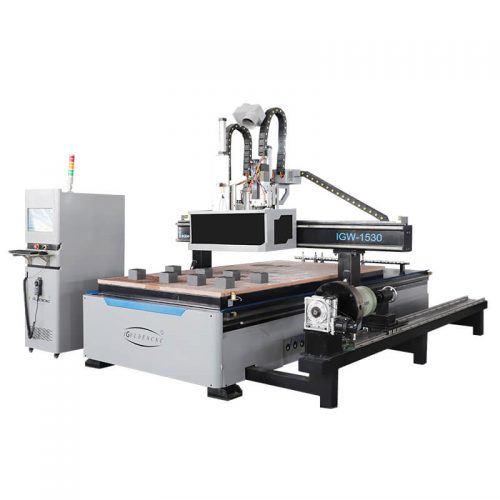
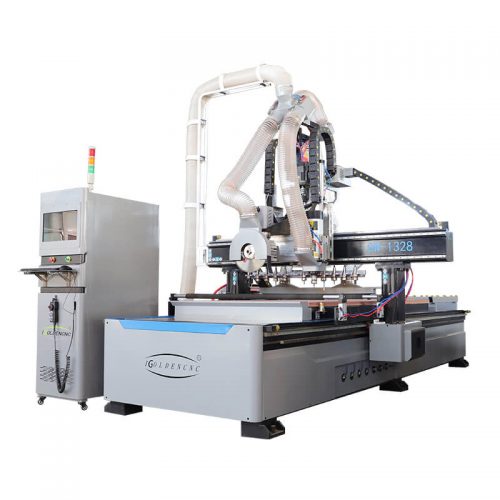
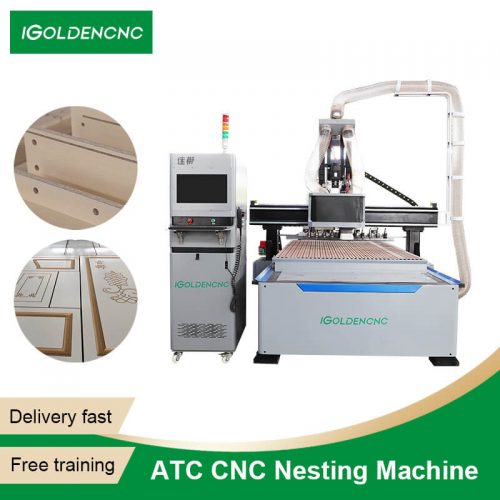
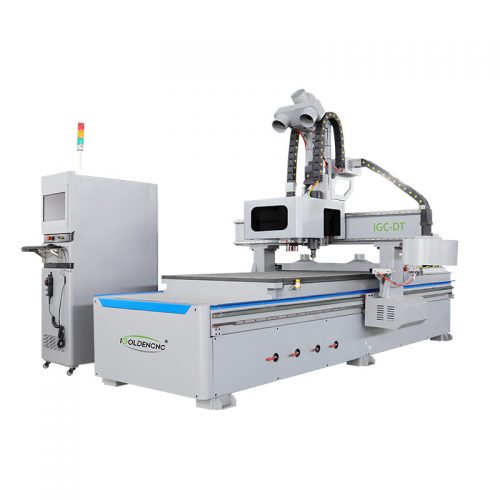
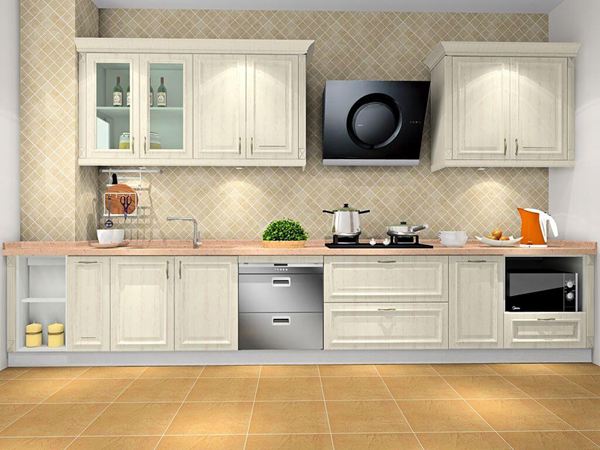
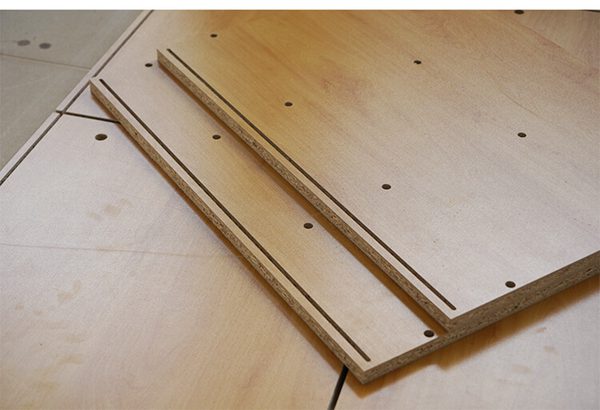
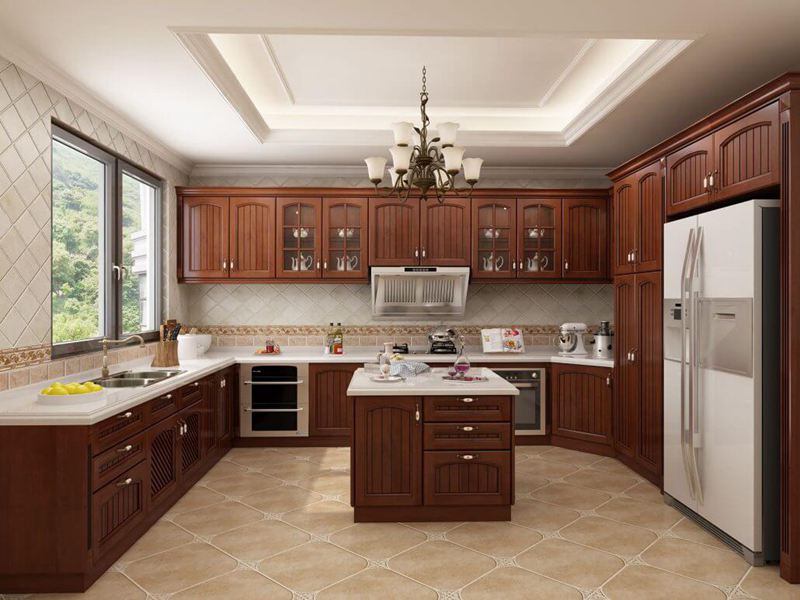
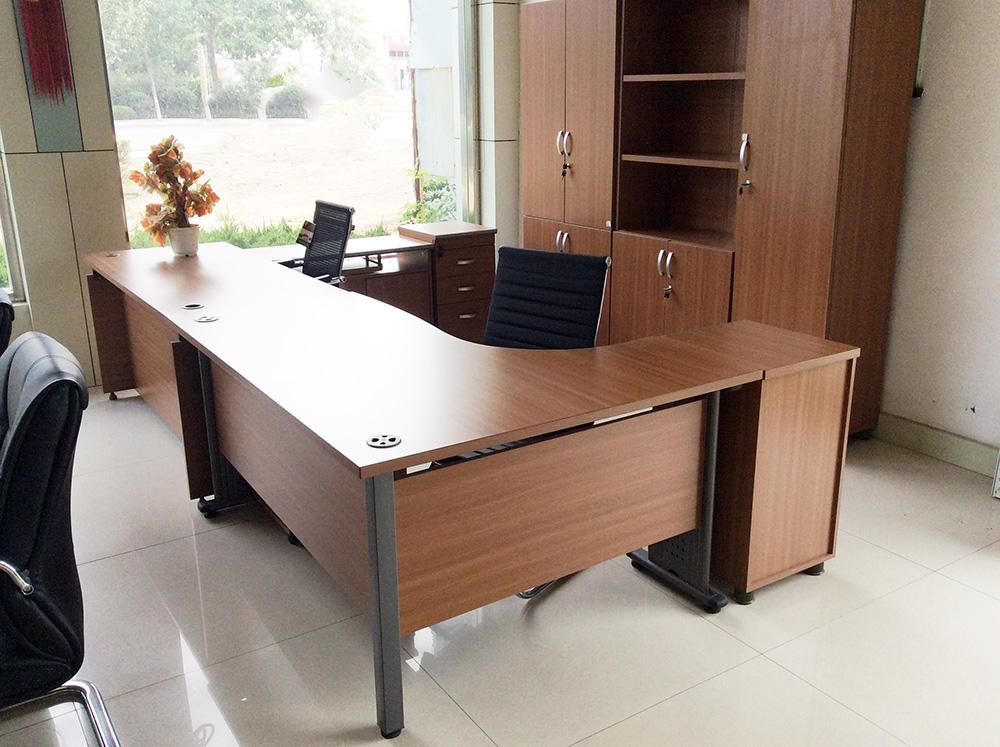
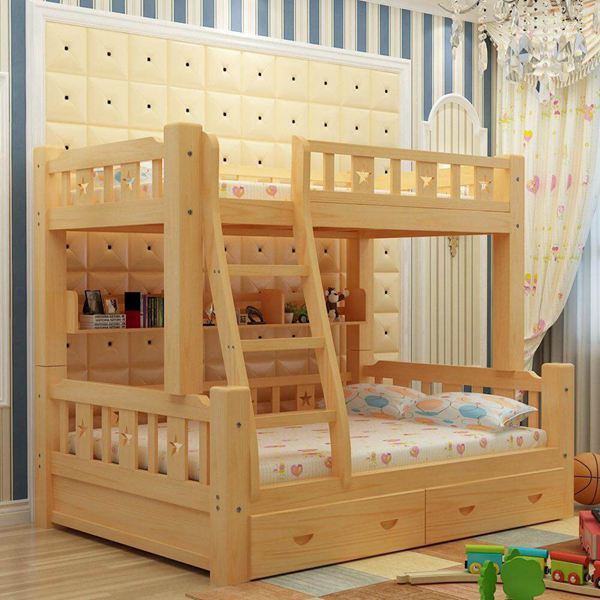
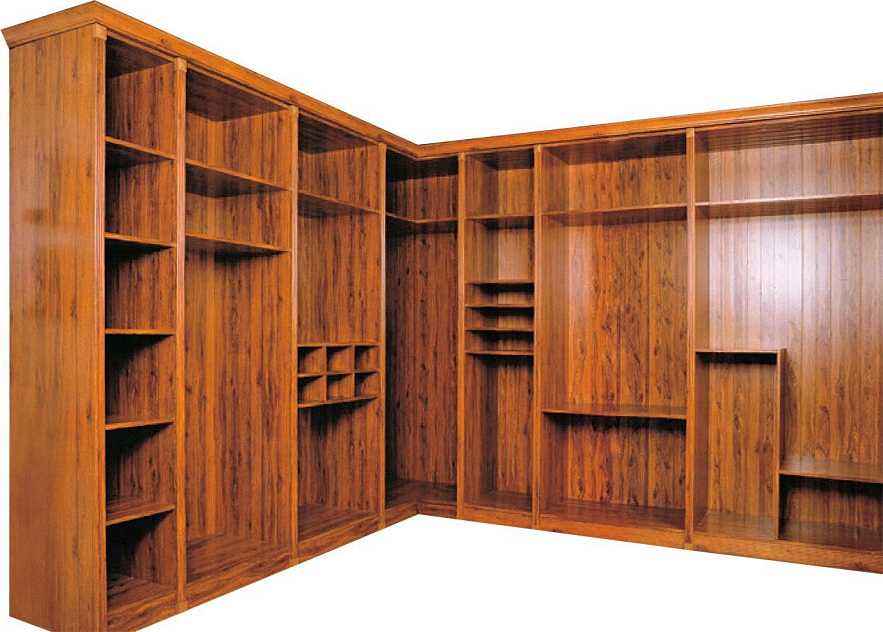
A Nesting CNC machine is a professional smart furniture making machine featuring with automatic labeling, coding, feeding, drilling, slotting, milling, cutting for whole house customization for cabinets, doors, closets, armoires, wardrobes, wall decorations, bookshelves, tables, screens, and built-in lockers.


Nesting CNC Machine
Nesting CNC router is a computer-controlled automatic nesting machine tool for custom flat-panel furniture manufacturing including bedroom furniture, kitchen furniture, home decor, shop and office furniture, which is available from personalized wall decorations to space-saving built-in cabinets.
The nesting CNC router addresses both problems simultaneously — and does so more effectively than any other single piece of equipment available to panel furniture manufacturers, cabinet shops, and custom woodworking businesses today. And it is designed for Cabinetmaking CNC Solution with auto loading and unloading system. By combining a high-performance CNC routing platform with intelligent nesting software that calculates the optimal arrangement of all required parts across all available sheets simultaneously, a nesting CNC router turns raw sheet material into finished, labeled, ready-to-assemble furniture components with a level of material efficiency and labor productivity that conventional manufacturing methods simply cannot match.
Nesting CNC Machine iGC-LT Video
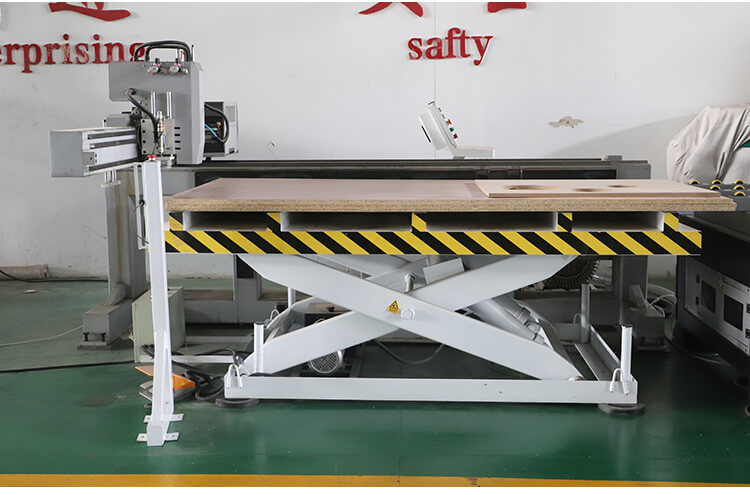
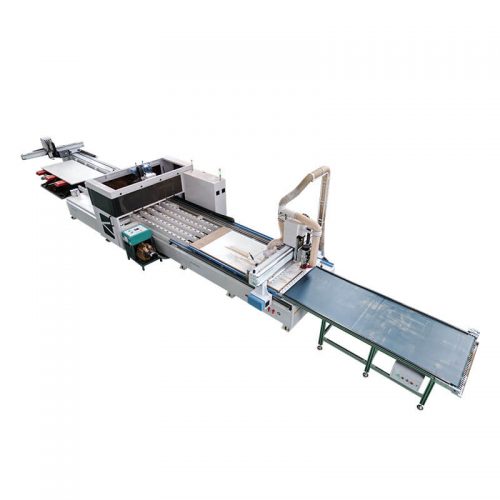
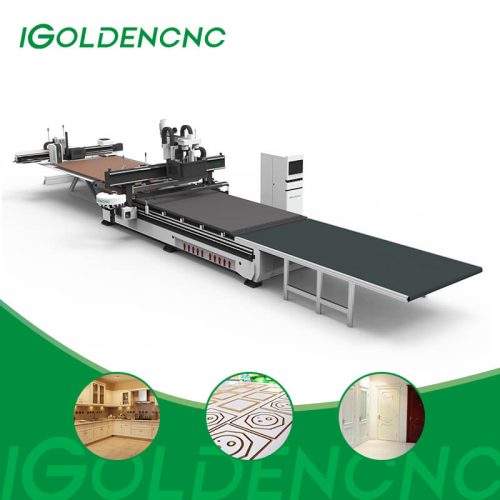
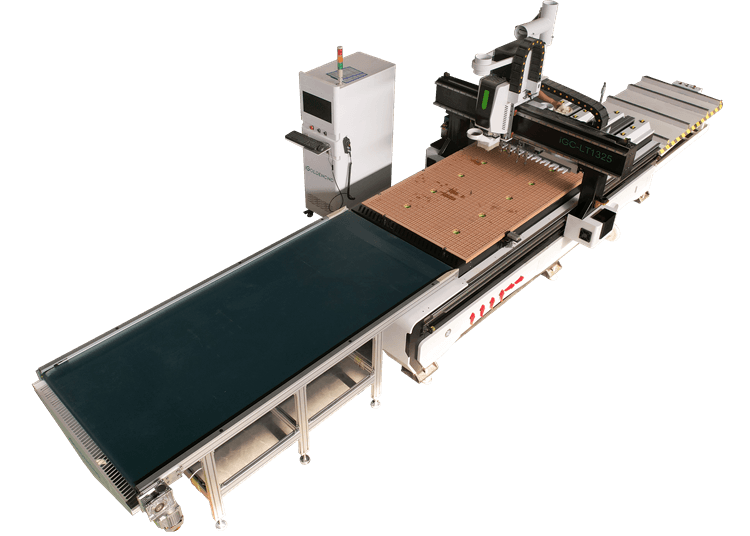
Automatic feeding platform
Auto feeding materials, automatic layout optimization, improve material utilization. Save working time: Automatic feeding, save the time of labor, no human intervention, minimizing error rate to minimum, ensure the quality of the order.
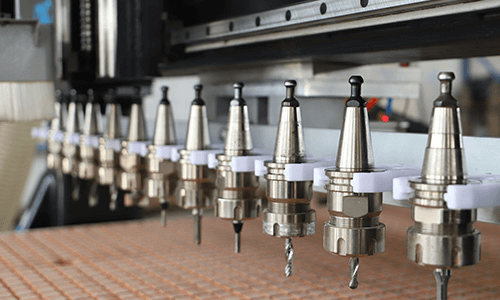
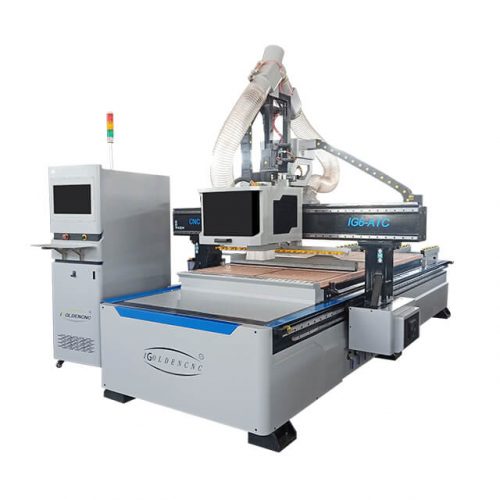
Linear ATC (Automatic Tool Changer)
An automatic tool changer (ATC) — storing 8–24 pre-set tools in a carousel or linear magazine — allows the machine to switch between these operations without stopping for manual tool changes.
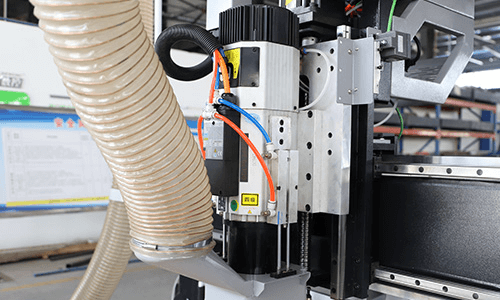
Spindle
9KW automatic tool changer spindle makes machine with high precision, long service time and stable movement.
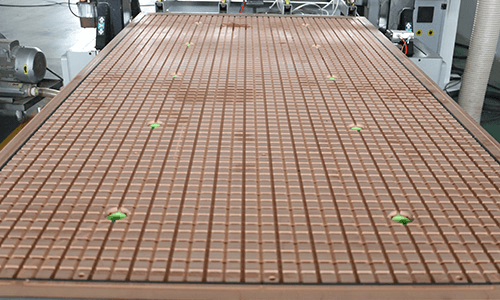
Vacuum adsorption table
Vacuum worktable and strong power suction vacuum pump 7.5KW is equipped with this CNC wood carving machine for carpentry.
Labeling and Nesting Cell for Panel Furniture Automatic Production Line
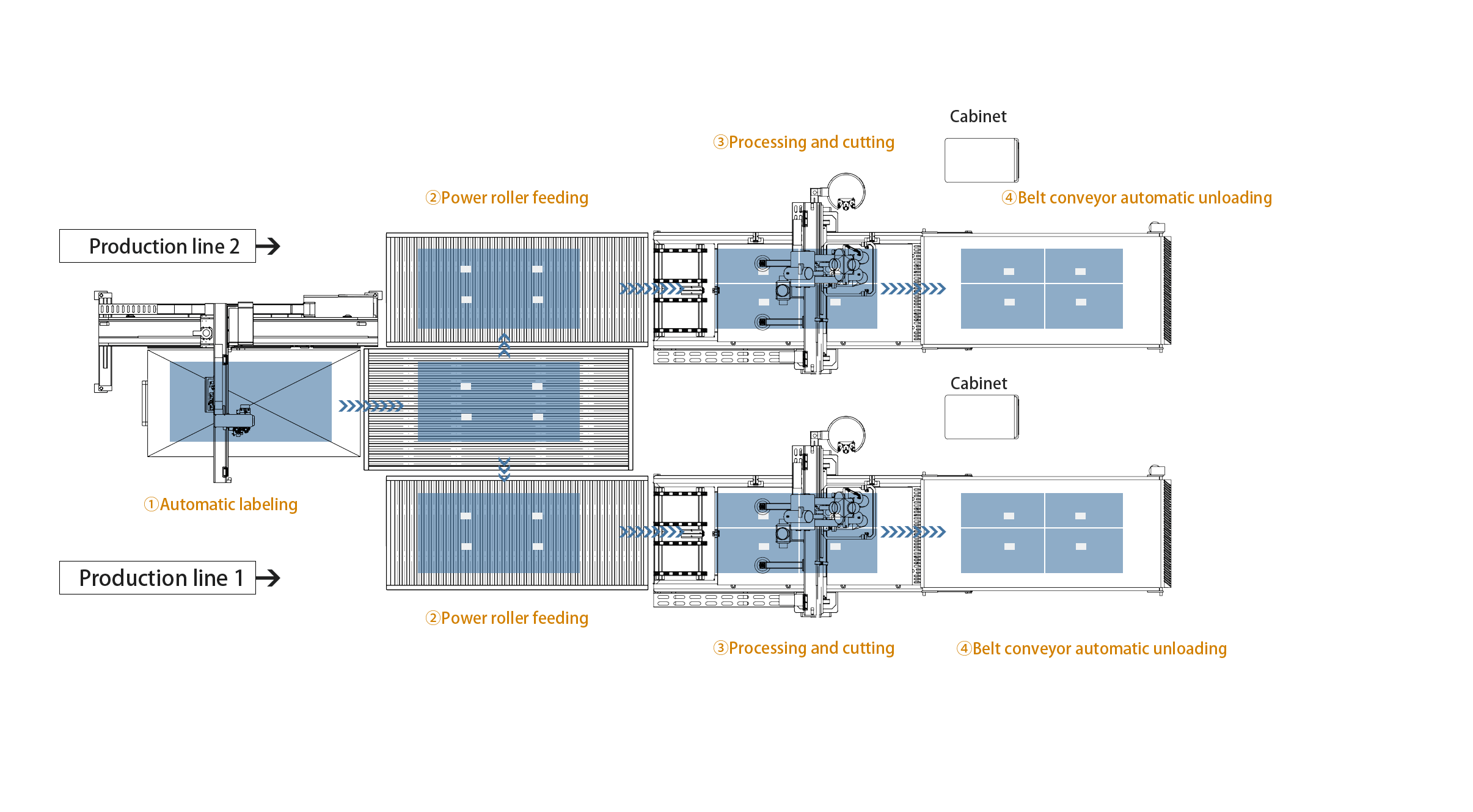
Nesting CNC Router Machine
| Technical indicators | parameter |
| Model | iGC-LT1325 |
| Working area(X,Y,Z) | 1300*2500*250mm |
| Max. working speed | 30000mm/min |
| Bed | Heavy-duty bed welded with square tubes, aging annealed, no deformation |
| Spindle Power | 9.0kw air-cooled tool change spindle, 24000rpm |
| mesa | PVC vacuum adsorption table |
| Rack | Taiwan Hiwin guide rail + YYC high-precision rack + hard helical gear shaft |
| Lead Screw | Taiwan TBI grinding screw |
| Drive motor | High power servo motor + Z-axis brake |
| Reducer | SHIMPO |
| Frequency Converter | Fuling |
| Vacuuming | 4KW double barrel vacuum cleaner |
| Vacuum Pump | 5.5KW air-cooled vacuum pump |
| Standard | Positioning cylinder + push device + secondary dust removal + suction cup + three-color light + tool setting instrument + tool lock seat |
| Control cabinet | IGOLDEN independent electric control cabinet |
| Tool magazine | Inline knife changer with 12 knives (16 knives can be customized) |
| Control System | Taiwan LNC/SYNTEC system (optional) + handle |
| Lubrication system | Automatic oil filling |
| Repeat positioning accuracy | 0.02mm |
| Command language | G Code |
| Operating voltage | AC220V/380V, 50Hz |
We offer customized services according to your requests such as the working area and specifications.
CNC Machining Center Application
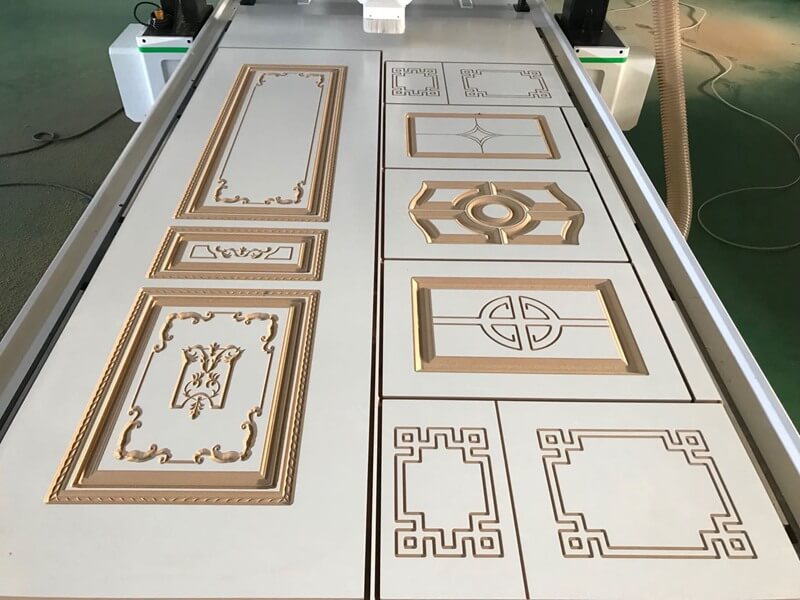
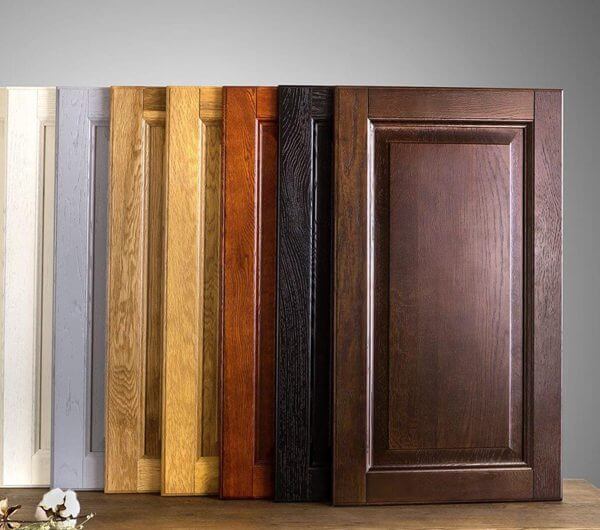
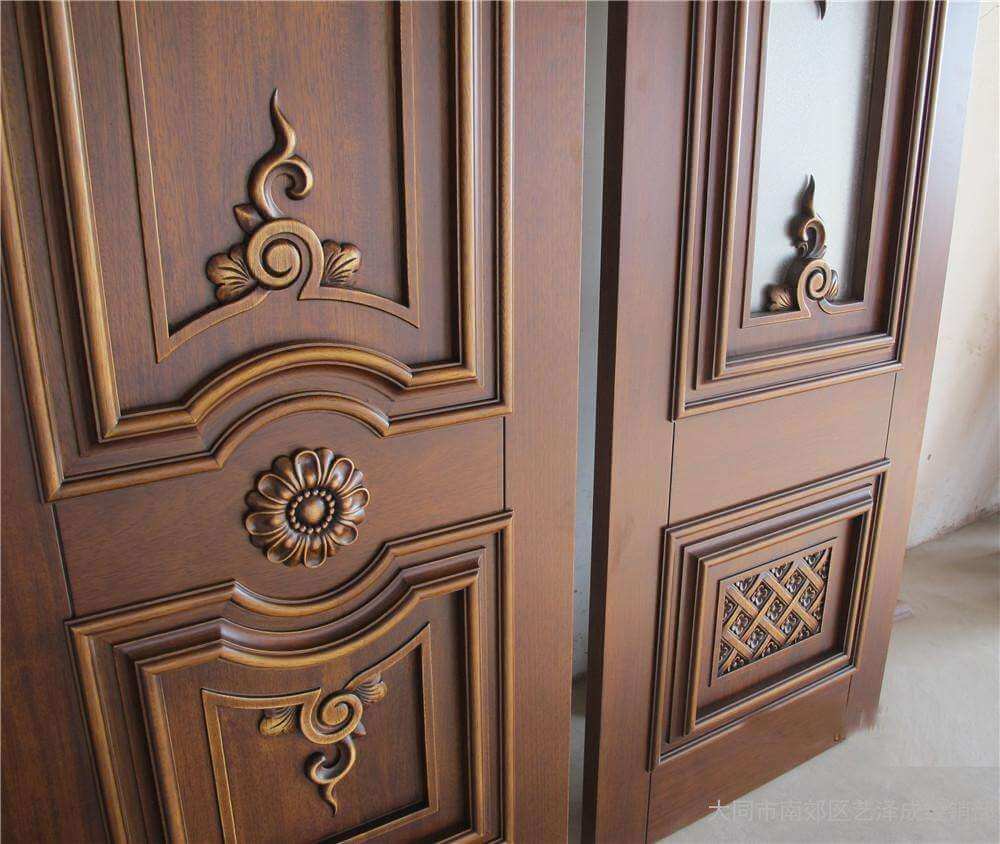
>Production and processing of various types of furniture:Wood Furniture Industry: Wave Plate, fine pattern, antique furniture, wooden door, screen, craft sash, composite gates, cupboard doors, interior doors, sofa legs, headboards and so on.
>Wooden door and furniture decoration industry: solid wood and composite door, cabinet door, large-area plate carving, solid wood, panel furniture carving, solid wood art mural carving, etc .;
>Wood products processing: clocks, electrical countertops, sporting goods and equipment;
>Musical instrument industry: three-dimensional curved surface and shape cutting of sculptable musical instruments;
>Crafts industry: photo frames, jewellery boxes.
CNC Nesting Machine Buying Guide
A nesting CNC router is a CNC routing machine specifically configured and optimized for sheet material processing using a production technique called nesting — the computational process of arranging multiple different part shapes on a single sheet to minimize waste and maximize the number of finished parts produced from each board.
The term “nesting” comes from the visual analogy of fitting puzzle pieces together: the software arranges part outlines on the virtual sheet like puzzle pieces, finding the tightest possible arrangement that avoids overlap, respects grain direction where required, accounts for router bit kerf width between adjacent parts, and sequences the cutting operations to minimize unnecessary head travel. The result is a cutting plan that extracts the maximum value from every sheet that enters the machine.
What distinguishes a nesting CNC router from a general-purpose CNC router table is not primarily the machine hardware — though nesting machines are typically configured with specific features that optimize sheet processing — but rather the integration of the machine with nesting-specific software, labeling systems, and production management tools that together create a complete sheet-to-part manufacturing workflow.
A nesting CNC router investment involves not just the machine but a complete system of software, tooling, and workflow changes. These are the factors that most directly determine whether the investment delivers the expected return.
In practice, a nesting CNC router is the central machine in a furniture and cabinetry manufacturing cell. Production orders are entered into design or ERP software, the nesting software automatically calculates optimal cutting plans across all active orders, the machine cuts complete nested sheets of parts, each part is automatically labeled with its identity and assembly destination, and finished components move directly to edge banding and assembly — with minimal manual handling or decision-making between any of these stages.
The hardware difference is primarily the vacuum table design: nesting routers use phenolic grid vacuum tables with zone control that maintain hold-down on individual freed parts throughout the cutting cycle, whereas standard CNC routers typically use basic MDF vacuum tables or mechanical clamping optimized for holding intact workpieces. The more significant difference is in the production workflow: a nesting CNC router is integrated with nesting software, labeling systems, and production management tools that together create an automated sheet-to-part manufacturing process. A standard CNC router processes one workpiece at a time; a nesting router processes an entire sheet of mixed parts from multiple orders in a single automated cycle.
Nesting CNC routers are primarily used for wood-based panel materials: melamine-faced particleboard, MDF, plywood, veneer-faced panels, and high-pressure laminate. With appropriate tooling, they also process solid wood panels, aluminum composite panels (ACM), foam sheet materials, PVC and acrylic sheet, and rubber. Each material requires specific bit types, spindle speeds, feed rates, and vacuum hold-down configurations. Always confirm material compatibility and tooling recommendations with your machine and bit suppliers before processing non-standard materials.
For any nesting application producing cabinet or furniture parts with hardware holes, routed details, and through-cuts — which describes the overwhelming majority of nesting work — an automatic tool changer is effectively required for productive operation. Without an ATC, the operator must stop the machine, manually change the tool, re-zero the tool length, and restart the program every time a different operation is required. On a typical nested cabinet sheet requiring 4–6 different tool types, this adds 20–40 minutes of non-productive time per sheet. An ATC eliminates this entirely and is one of the most reliable productivity investments on a nesting machine.
Yes — and this is in fact the defining architectural choice in panel furniture production: beam saw plus separate machining center versus nesting router as a single integrated processing station. The beam saw approach offers higher throughput on large volumes of standard rectangular parts and lower cost per part on simple cutting work. The nesting router approach offers higher flexibility for complex part shapes, eliminates the separate machining center for drilling and routing, reduces total floor space requirements, and produces fully machined parts in a single setup. For high-mix, custom, or made-to-order furniture production — where part variety is high and batch sizes are small — the nesting router consistently outperforms the beam saw approach on total cost per finished part. For high-volume production of standardized products with simple rectangular geometry, beam saws remain competitive. Most large furniture factories use both technologies in different areas of the production line, matching each approach to the product type it serves best.
Reviews

Germany W********h
We’ve been running a mid-size cabinet shop for 14 years, and switching to a nesting CNC router was without question the single best investment we’ve ever made. Before the machine, we were losing close to 18% of every sheet to waste and spending two full days on labor just to get parts cut and drilled for a standard kitchen order.
Canada J******o
.We manufacture custom fitted wardrobes and bedroom furniture for the Italian and German markets, where quality expectations are extremely high and lead times are getting shorter every season. Before installing our nesting router, we were nesting orders individually — each job on its own sheets, with no combining across orders.
Australia H*******m
We specialize in made-to-order kitchen cabinetry and built-in storage for residential builders across Victoria and New South Wales. Every single job we produce is different — different dimensions, different configurations, different materials — and that kind of high-mix, low-volume work absolutely punishes conventional cutting setups.

Australia K****l
The nesting router changed everything. Our CAD software feeds directly into the nesting program, the machine generates a complete cutting plan across all active orders, and we go from design file to fully machined, labeled parts in a fraction of the time it used to take us.
Algeria L****y
Since installing our nesting CNC router two years ago, our cost per panel has dropped significantly — the combination of reduced material waste and lower labor per part has made us genuinely competitive against imported furniture that used to undercut us on price.
America N*******c
The machine runs two shifts daily without issues. Maintenance is straightforward, spare parts are accessible, and after-sales support from our supplier has been responsive every time we’ve needed it. For any furniture manufacturer in a developing market looking to modernize their production, this is the investment that changes the conversation.